Recognising Immediate Mechanical Danger
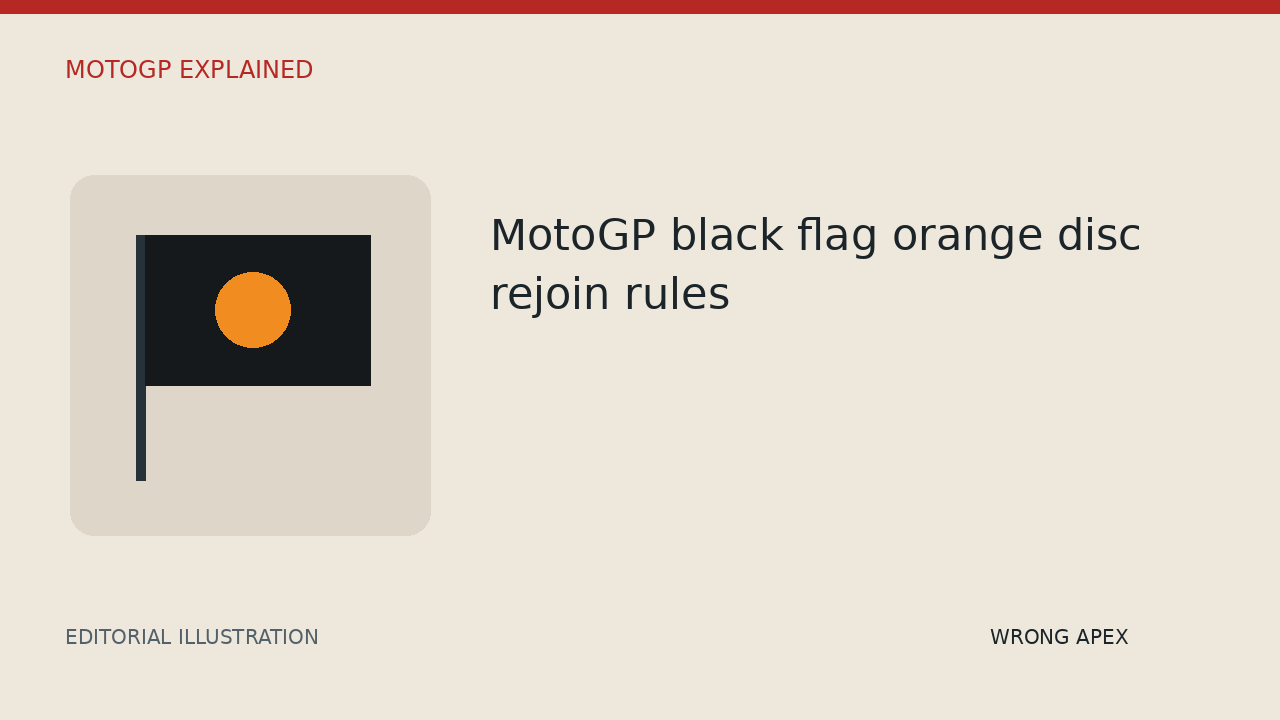
When a racing motorcycle develops a severe mechanical defect, track marshals and race direction must react quickly to prevent harm. Under FIM regulations, a black flag featuring an orange disc alongside a competitor's number signals that the machine has suffered a mechanical issue likely to endanger the rider or surrounding competitors. Unlike general sporting penalties, this instruction requires the rider to leave the active circuit immediately rather than continuing around to the pit lane.
The Process for Authorised Track Return
Experiencing an acute mechanical issue does not automatically mean permanent retirement from the session. However, understanding the MotoGP black flag orange disc rejoin rules is essential for teams aiming to fix the machine: finishing technical repairs in the garage does not grant an automatic right to ride back onto the circuit. Even after technicians resolve the defect, the rider may only rejoin the session once an official provides formal authorisation.
Differentiating Safety Warnings From Technical Calls
The orange disc signal targets safety-critical mechanical danger, which sets it apart from other official flags. By comparison, a plain black flag can represent a penalty requiring a pit stop by the end of the current lap without permission to restart, or it can address non-hazardous issues such as a transponder fault. Because trackside light panels can accompany or substitute physical flags, riders receive direct digital and visual warnings whenever severe mechanical trouble demands an immediate exit.
Official reference: official MotoGP guide to flag meanings.

No comments:
Post a Comment