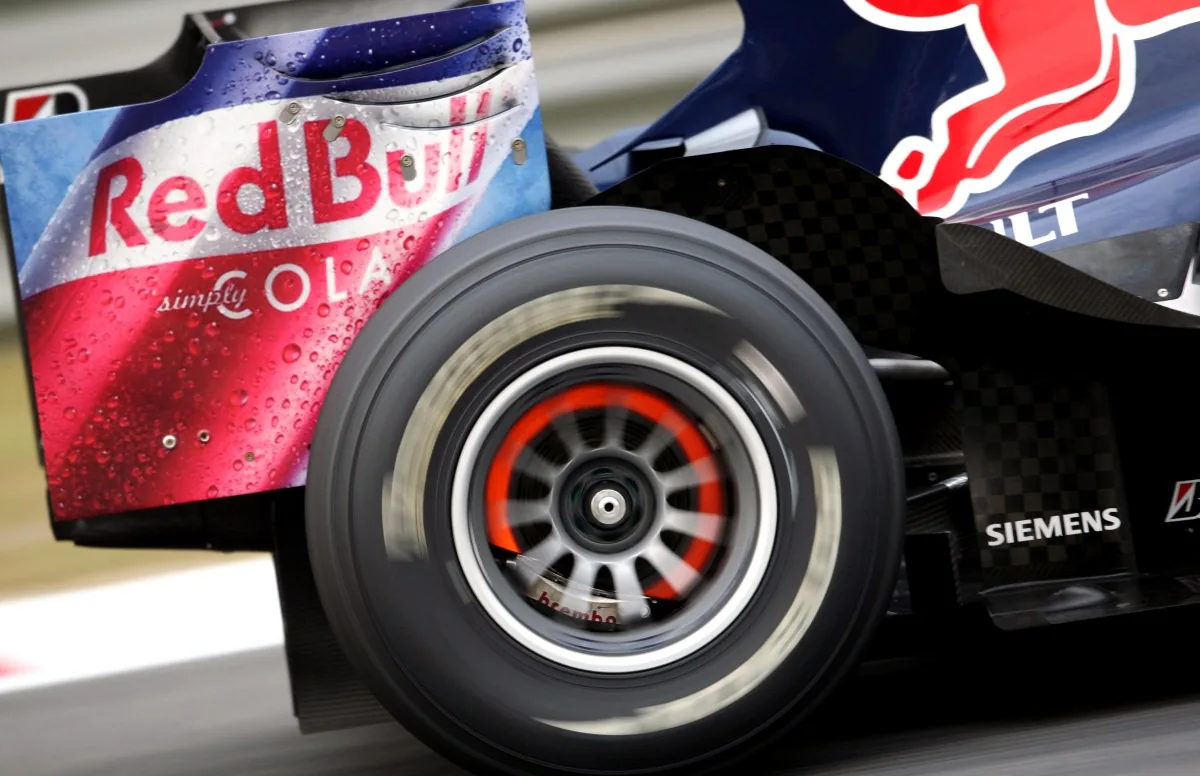
Frictional Heat and Normal Operating Windows
Spectators frequently notice bright crimson light radiating from the wheel hubs during heavy deceleration. The physical reason Why F1 brake discs glow red is straightforward: friction between the pads and discs generates substantial thermal energy, causing the carbon composite material to emit visible light. In endurance racing benchmarks cited by Le Mans organizers, carbon discs begin emitting a visible red glow around 600°C and glow noticeably brighter above 1,000°C, while extreme Formula 1 braking accounts have recorded disc temperatures exceeding 1,200°C.
Balancing Operating Heat and Cooling Dissipation
From a reliability standpoint, glowing carbon discs do not signify an imminent mechanical failure. Racing brakes operate poorly when cold, meaning teams must maintain adequate thermal energy rather than simply cooling the components as aggressively as possible. Carbon-carbon materials are engineered specifically to tolerate severe thermal cycling, uneven temperature gradients, and thermal expansion during repeated deceleration cycles.
When Thermal Limits Threaten Reliability
System degradation occurs when excessive temperatures are paired with inadequate heat dissipation. To evacuate heat, discs rely on ventilation holes to shed thermal energy between braking zones. If operating temperatures push past design boundaries and ventilation proves insufficient, the resulting overheating accelerates disc and pad wear while reducing overall braking efficiency.
Official reference: Formula 1 official news and results.