Wednesday, 21 October 2026

How Administrative Timing and Lateness Limits Can End a Rally Early

Example 2017 Olympus Rally time card showing stage and transit timing boxes

The Physical Log That Dictates Competition Survival

Rally performance depends as much on keeping to an official schedule as it does on mechanical stamina. Beyond physical car components surviving rough terrain, a competitor's survival in the classification hinges on a durable piece of card stock carried inside the cockpit. In stage competition, understanding what is the time card rally co drivers hand to officials reveals how administrative timing governs the entire event and how clerical delays introduce race-ending risks.

The document serves as the official legal ledger of a car's journey across liaisons and timed stages. Collected after administrative and technical checks, it contains dedicated boxes where marshals log certified arrival, start, and finish times. Losing this mandatory item triggers disqualification or massive time penalties, turning paperwork security into an operational necessity.

Target Timing and the Risk of Cumulative Exclusion

Rallies do not run on a simple open clock. Instead, regulations assign target durations between consecutive control zones. A co-driver must calculate the exact target minute by adding the designated allowance to their previous departure stamp, navigating public liaisons under whole-minute timing while obeying traffic rules.

When delays occur, teams face strict tolerance boundaries known as the Over Time Limit (OTL). While regulations often allow a buffer such as 15 minutes of penalty-free delay before penalties or limits bite, accumulating excessive lateness forces officials to close the control post. Once a crew exceeds the cumulative lateness ceiling, they face immediate exclusion, ending their rally regardless of the car's running condition.

Procedural Errors and Severe Time Penalties

Administrative penalties can reshape standings far more drastically than minor stage losses. Checking into a control ahead of schedule is particularly costly, carrying a penalty of one full minute for every minute or fraction early. Late arrivals typically incur ten seconds per minute behind schedule.

Strict control procedures also create operational traps. For instance, regulations forbid mechanical work between stage arrival controls and the start line beyond wiping lights or glass; encountering a puncture in this zone forces the crew to start the stage on that flat tyre and stop to change it during the stage itself. Furthermore, overshooting a stop control line carries strict safety bans against reversing, requiring the co-driver to dismount on foot to hand over the document. Throughout these hectic stops, failing to verify marshal entries before driving away risks locking in inaccurate timestamps that can ruin an otherwise clean run.

Official reference: FIA 2026 WRC sporting regulations and standard time cards.

Why Pit Lane Access Closes During On-Track Safety Emergencies in IndyCar

IndyCar emergency service when pits are closed

Safety Response Demands Overriding Pit Availability

When an incident on circuit leaves a driver in immediate danger or requires rescue teams to deploy, race officiating prioritizes track safety above routine team operations. Under IndyCar regulations, pit lane entry is closed to competitors during active emergency responses to ensure safety vehicles and medical personnel can access the scene without conflicting traffic. Managing IndyCar emergency service when pits are closed establishes strict boundaries to protect trackside crews, even though denying immediate pit access directly impacts competitor strategy.

The Operational Shift Between Routine Yellows and Rescue Calls

The distinction between emergency and non-emergency situations dictates how neutralizations unfold. Ahead of the 2012 Grand Prix of Long Beach, IndyCar introduced procedural changes after earlier events that season at St Petersburg and Barber Motorsports Park produced dangerous pit lane congestion. For minor incidents where a car is stranded without imminent hazard, officials can delay a full-course yellow briefly so lead cars can pit normally, keeping the lane open. However, when emergency crews must rush onto the track, that flexibility disappears and the entrance is sealed instantly, preventing field-wide stops until the track environment is stabilized.

Official reference: official IndyCar rulebook.

How Safety Car Unlapping Rules Affect Cars Recovering from Technical Faults

Red Mercedes-AMG Formula 1 Safety Car on track at Suzuka in 2025

The Timing Snapshot That Determines Eligibility

When a car suffers a mechanical issue or spends extended time in the pits for repairs, falling a lap or more behind the leaders is a common consequence. Under Article B5.13 of the 2026 FIA Sporting Regulations, regaining that lost lap during a neutralization requires meeting strict procedural criteria rather than simply running behind the leader when caution periods occur.

The official procedure for F1 Safety Car unlapping does not activate automatically, nor does it evaluate track position at the moment Race Control issues the instruction. Instead, eligibility is determined by a specific timing snapshot: each car is evaluated on the lap in which it crosses the first safety car line for the second time following deployment, and it qualifies only if it was already lapped upon crossing the Control Line at the end of that specific lap. A car delayed by a mechanical fault that drops a lap down after that snapshot cannot be released under that instruction.

Rejoining the Queue and Restart Constraints

Once Race Control issues the message that lapped cars may overtake and illuminates the green light, eligible drivers must pass the lead-lap runners and the Safety Car, then circulate at an appropriate speed to catch the rear of the field. Lead-lap competitors must hold the racing line during these passes unless avoiding action is required.

For a driver recovering from earlier setbacks, the regulations do not guarantee enough time to fully reconnect with the train before green-flag conditions resume. Under Article B5.13.5, the Safety Car typically enters the pit lane at the end of the lap following the unlapping instruction unless the Race Director deems its ongoing presence necessary. Drivers are mandated to make every effort to rejoin the queue, but racing resumes once cars cross the Control Line after the Safety Car enters pit entry, meaning delayed cars may still be circulating to reach the pack when full-pace racing restarts.

Official reference: official glossary.

Tuesday, 20 October 2026

How Mechanical Failures and Slowing Cars Are Handled Under Virtual Safety Car Conditions

Formula 1 cars driving on circuit during the 2023 Austrian Grand Prix

Overtaking cars with mechanical problems

When an on-track incident triggers a caution, drivers are normally strictly forbidden from passing one another. Under the sporting regulations governing the F1 virtual safety car, however, a specific exception exists when a rival suffers a sudden mechanical failure or reliability problem. If a car slows down with an obvious issue, following competitors are permitted to overtake it rather than being forced to trail behind a crippled machine.

The regulations do not require the stricken car to come to a complete halt before a pass can be made. At the same time, this allowance is strictly limited to clear issues; drivers cannot pass a healthy rival simply because their own target pace brings them alongside.

Pit lane rules and servicing during caution periods

Reliability troubles often force drivers to seek immediate mechanical attention in the pit lane, but regulatory limits apply during caution phases. The sporting rules specify that cars entering the pits during a deployment must do so for the purpose of changing tyres, meaning teams cannot treat the intervention as an unrestricted opportunity for any unrelated repair.

While cars navigating the pit entrance, service lane, or exit roads may pass other cars within those same confines, track track gaps and positions are never permanently frozen. If a car struggles with pacing or visits the garage, the laps completed still count toward the total grand prix distance.

Official reference: 2023 explanation of delta controls.

How Power Unit Penalties and Setup Repairs Trigger Pit Lane Starts

A Team Lotus Formula 1 car in the pit lane during a Grand Prix race weekend.

Component Allocations and Parc Ferme Breaches

Formula 1 teams face tight seasonal hardware limits on components such as engines, turbochargers, hybrid units, and gearboxes. When mechanical failures or reliability concerns force teams to exceed these allocations, sporting regulations impose severe grid drops. A first additional power unit component yields a 10-place penalty, while subsequent elements add five places. When these penalties accumulate beyond reasonable recovery on the starting grid, teams frequently choose to break parc ferme conditions deliberately. By installing fresh components or retuning suspension, floor, and rear wing settings for race conditions, engineers accept a pit lane start to overhaul the car's mechanical health.

Queue Priorities and Pre-Race Mechanical Delays

When several competitors face technical penalties or pre-race fixes, sorting the exit line requires a clear regulatory standard. The F1 pit lane start order when multiple cars start from pits is governed by Article 42.3 of the FIA Sporting Regulations. For drivers carrying 15 or fewer cumulative grid penalties, officials rank cars by combining qualifying positions with accrued grid penalties, giving queue priority to the lowest score. Competitors with more than 15 penalties line up behind those with lower counts, while cars delayed by late pre-race repairs queue behind earlier starters in order of pit entry.

Operational Deadlines and Green Light Protocols

Reliability issues can also strike during pre-race grid preparations. Article 44.1 requires every qualified car to leave the pit lane under its own power at least 30 minutes before the formation lap begins, while grid rules require teams to start engines at the one-minute mark and clear personnel before the 15-second signal. If emergency mechanical work causes crew members to touch a car after the 15-second warning, that vehicle must forfeit its grid slot and head to the pit lane. Once the main field passes the pit exit on race start, race control illuminates the green light, releasing the queued cars onto the track.

Official reference: Formula 1 official regulatory explanation.

Sunday, 18 October 2026

How Late Energy Deployment Deficits Can Decide Track Position Under Modern Technical Rules

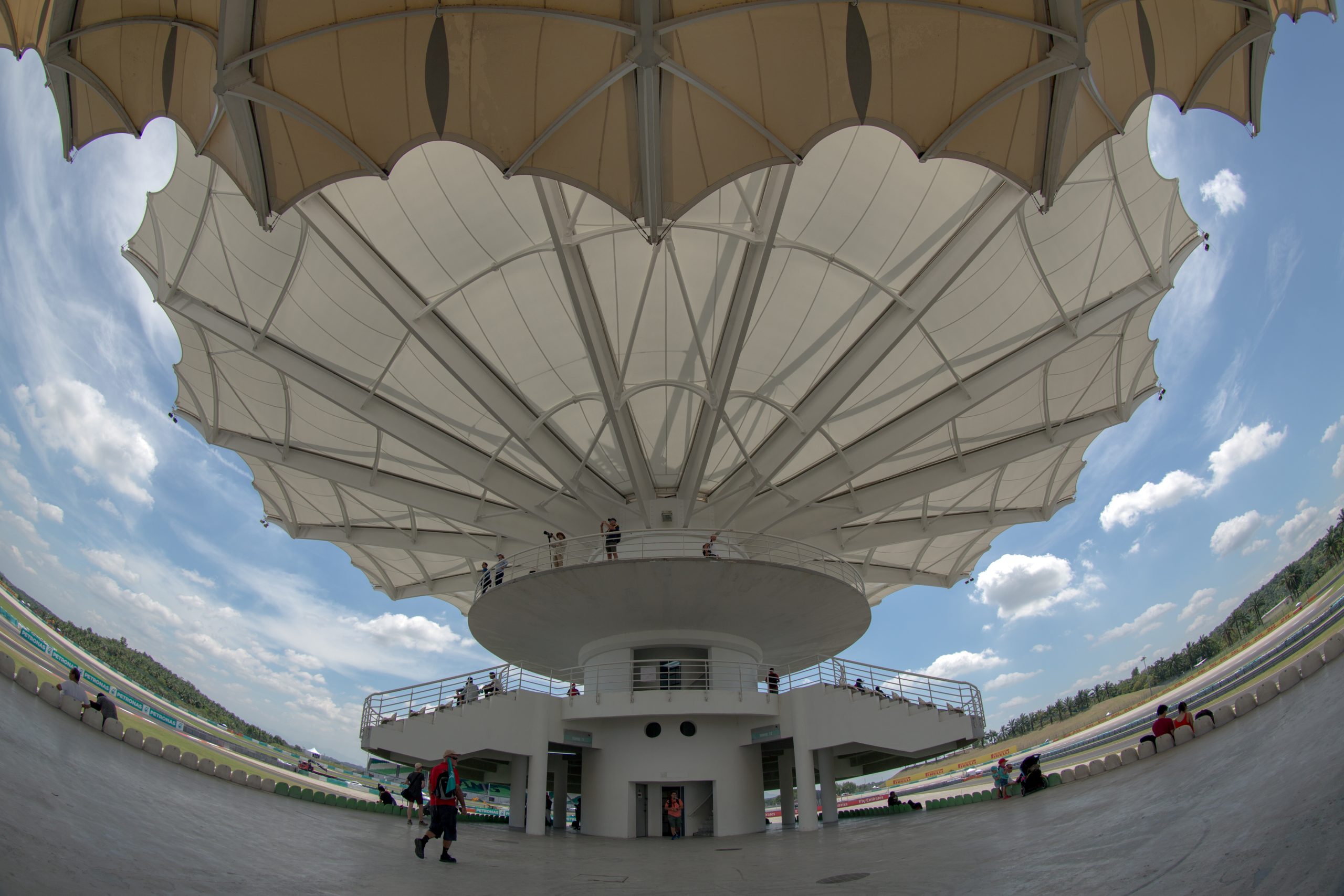
Exterior view of the covered grandstand tower, palm trees, and perimeter roadway at Sepang International Circuit in Malaysia.

The Impact of Electrical Boost on Defending Position

During the 2026 Bahrain Grand Prix held at Sepang International Circuit, Red Bull Racing driver Isack Hadjar moved into third place following a Lap 49 mechanical failure for George Russell. However, following the subsequent Safety Car restart, an Isack Hadjar Sepang battery problem triggered a rapid loss of track position, dropping to fifth place at the finish line, 8.571 seconds behind race winner Max Verstappen and 3.652 seconds behind third-place finisher Lewis Hamilton.

Under the 2026 technical regulations, the kinetic motor generator provides up to 350 kW of electrical power. In a post-race interview with Formula1.com, Hadjar reported having no battery power available along the straights across the first two laps of green-flag running after the restart. On Sepang's long straightaways, the temporary absence of electrical assistance left his car unable to counter straight-line drafting, allowing Hamilton and Charles Leclerc to pass before the deployment recovered.

Distinguishing Reported Symptoms From Verified Root Causes

While Hadjar identified both the missing battery boost and a separate struggle with tyre grip as the reasons for losing third place, the underlying engineering cause of the electrical deficit was not officially confirmed. Hadjar noted that normal power delivery resumed after two laps, which allowed him to stabilize his pace and defend fifth place against Oscar Piastri.

Neither Red Bull Racing nor Red Bull Ford Powertrains released telemetry data or technical explanations confirming why the deployment failed. Furthermore, no post-race reports from the FIA Technical Delegate addressed the car's Energy Store or motor generator systems. Without published telemetry or regulatory findings, whether the temporary deficit resulted from thermal derating, harvesting limitations behind the Safety Car, or software deployment mapping remains unverified.

Official reference: formula1.com.

Sunday, 11 October 2026

Sprint Qualifying vs Grand Prix Qualifying: How the Two F1 Sessions Differ

On a standard Formula 1 weekend, there is only one qualifying session. On a weekend governed by F1 sprint weekend format rules—held at up to six events per championship under the 2025 sporting regulations—the schedule contains two distinct qualifying sessions: Sprint Qualifying and Grand Prix qualifying. Because both sessions use timed knockout stages, viewers frequently ask how they differ, when they take place, and what each session actually decides.

Why Does an F1 Sprint Weekend Have Two Qualifying Sessions?

An F1 Sprint weekend features two separate qualifying sessions because it contains two separate races: Saturday's 100+ km Sprint and Sunday's full Grand Prix. Rather than using the Sprint race to determine Sunday's starting grid, the regulations provide each race with its own independent qualifying session and starting classification.

When Does Each Qualifying Session Take Place?

The two sessions are scheduled on different days with defined intervals under the regulations:

  • Sprint Qualifying: Held on Day 1 (Friday), beginning 2.5 to 3.5 hours after the conclusion of Free Practice 1 (FP1).
  • Grand Prix Qualifying: Held on Day 2 (Saturday), beginning 3 to 4 hours after the Saturday morning Sprint finishes.

How Do the Session Stage Durations Compare?

While both sessions use a three-stage knockout format, Sprint Qualifying runs on compressed timelines:

  • Sprint Qualifying Stages: SQ1 lasts 12 minutes, SQ2 lasts 10 minutes, and SQ3 lasts 8 minutes. Seven-minute breaks separate each stage.
  • Grand Prix Qualifying Stages: Q1 lasts 18 minutes, Q2 lasts 15 minutes, and Q3 lasts 12 minutes. A seven-minute break follows Q1, and an eight-minute break follows Q2.

How Does Elimination Work in Each Session?

Under the 2025 sporting regulations, both sessions apply identical elimination counts assuming a standard 20-car field:

  • Five cars are eliminated after the first stage (SQ1 or Q1).
  • Five cars are eliminated after the second stage (SQ2 or Q2).
  • The remaining ten cars contest the final stage (SQ3 or Q3) to decide the top ten grid positions.

If the eligible field size is not 20 cars, Article 39.5 specifies the adjusted elimination numbers.

What Does Each Classification Officially Determine?

The two sessions determine completely separate grids:

  • Sprint Qualifying: Produces the official classification that forms the starting grid for Saturday's Sprint race (least complete laps exceeding 100 km).
  • Grand Prix Qualifying: Produces the official classification that forms the starting grid for Sunday's Grand Prix, subject to sporting penalties applied under Article 39.4.

Finishing positions in Saturday's Sprint have no bearing on Sunday's Grand Prix starting grid.

How Does Parc Fermé Apply to Both Sessions?

Under Article 40.2, cars are placed under parc fermé conditions twice during the weekend. The first period begins when each car first leaves the pit lane in Sprint Qualifying and lasts until the Sprint start. The second period begins when each car first leaves the pit lane in Grand Prix qualifying and lasts until the Grand Prix start. Teams must comply with strict maintenance and sealing limits during each window, rather than having unrestricted setup freedom.

For fans who want to explore the specific rule citations and session timings governing both formats, the Wrong Apex guide to F1 Sprint and Grand Prix qualifying differences provides a complete breakdown.

The rules summarized above follow Issue 5 of the FIA 2025 Formula 1 Sporting Regulations (dated 30 April 2025), Articles 5.3, 38–40. These provisions represent 2025 rules, and later editions may amend specific procedures. Event organizers determine specific clock times within the mandated intervals.

Official reference: FIA 2025 Formula 1 Sporting Regulations, Issue 5 (30 April 2025).